Do Business Owners Have a Responsibility to Their Community?
Does a small business owner have a responsibility to care for the property he owns? Does he have a responsibility to the customers and the community that patronize his business? Instinctively, we want to say yes, of course, absolutely. Why would you open a business in a community you wanted to take advantage of, a community you didn't want to be part of? But the profit motive skews the heart of man. The lust for capital, the pursuit of profit at the expense of all else, is one of the greatest sins. Once you have committed to that dark path, ethics, honor and community quickly fall by the wayside.
For every altruistic cafe owner who fosters cats in half the shop, keeps a community pantry out front and is a real resource for the people around them, there are a dozen other small business owners with one goal and one goal only: to make a profit from your community. You can see very clearly what happens when someone disregards their responsibility to that community. According to our society's rules, no one owes anyone anything. That is the American way in the twenty-first century. It is the "fuck you, got mine" society, and I dare say it is really no society at all. How can you have a society when everyone is out to get each other? If anyone can be finessed by the next finesser, you have to become a finesser too.
Still, we want to say the small business owner has that responsibility, because it simply makes sense. It makes for a better community, a better place to live and exist.
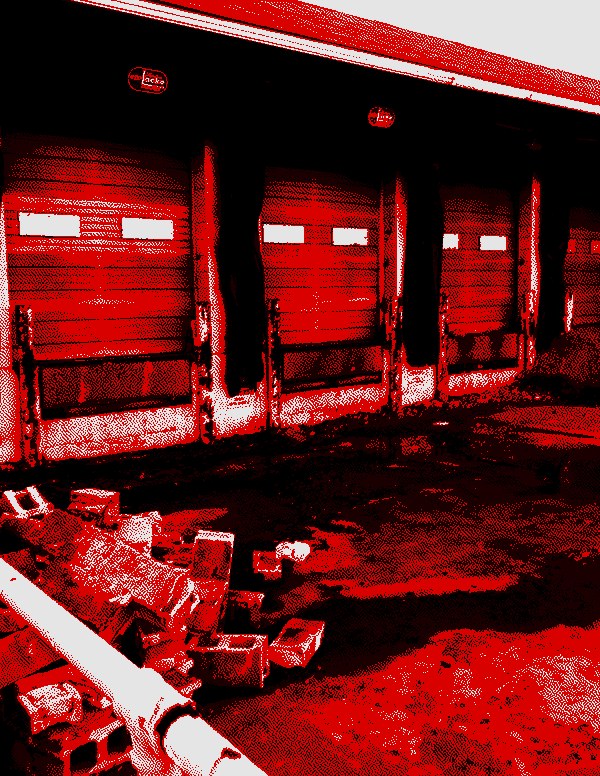
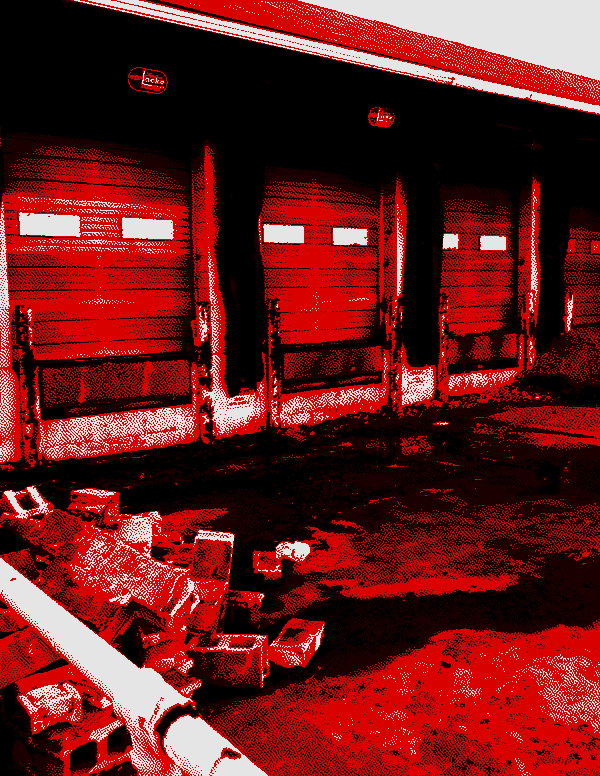
Imagine a restaurant. It opens in a part of the city that is less than financially well off, and it's one of the few places in the area that serves hot food. We would hope that restaurant understands its place in the community and provides good food, good service and a fair price. But a year passes, and you return to find the building caked in litter and filth. The prices are higher than you'd like. One of the windows is boarded up, and the whole place is in a state of disrepair. Maybe someone is openly using drugs on the property. But the bills are paid, and you see the owner in a new Lexus or Mercedes or Tesla, and you start to wonder why this place is allowed to operate like this. I don't want this blighted building in my neighborhood. I don't want this pile of filth and litter in my neighborhood. And I surely don't want people openly smoking crack on the same block where I take my kids to their doctor's appointments.
All of this happens because, ultimately, that business owner has very little responsibility to the community, the people he serves or his customers. As long as he's making a profit, he's content. The food might not be very good. It might be made under poor sanitation, cutting every corner possible. But there aren't many other places to eat, so don't you want a hot meal? The owner's position in the community gives him a choice. He can use that position to take advantage, or he can use it to uplift. The profit motive, the sin of greed, the sin of mammon, keeps him from uplifting. As the Gospel puts it: "No man can serve two masters... Ye cannot serve God and mammon."
Now, you might ask: wouldn't the business make more money if it were cleaned up and presentable, if the food met a higher standard, if the sanitation was up to code, if no one was blowing crack smoke near the drive-thru? The answer is yes, but does it actually matter? Part of being a small business owner is embracing the mindset of an authoritarian tyrant and coasting off the labor of others. The owner might be an absentee landlord. And when you pay a skeleton crew of three people to run a business for twelve hours, things fall into disrepair and decay. Corners get cut. The workers get blamed. They're underpaid, understaffed and working under a manager who's really only in it to make those Mercedes payments. These are the businesses where the police get the calls for overdoses. These are the businesses with one-star reviews that somehow have a grandfathered-in loophole to keep running, because, let's face it, the city doesn't really want them around either.
I don't think it's unfair to judge small business owners by the same standard you would judge any other man. The Lord gave us the golden rule: "All things whatsoever ye would that men should do to you, do ye even so to them." If the owner won't eat the food his restaurant serves, and wouldn't eat at a restaurant like the one he owns ("I don't eat at places like that"), then he is not treating others as he would like to be treated. He has betrayed the golden rule. He has showcased his love of mammon. He has showcased the sin of greed.
As workers, we're often told we shouldn't judge the small business owner. After all, he's the job creator, the job provider, the reason you're employed in the first place. You should be grateful. You should kiss the ring. He has a responsibility to make money, that's how the economy works, so be grateful you get to help him reach that goal. We're told we need more attention to detail, while we work understaffed and underpaid at a run-down location with an absentee manager. But the owner, the small business owner, the petite bourgeoisie, is never tasked with paying attention to detail. If he were, he would see that his business is run down. A slumlord tasked with paying attention to detail would see that his rooms have gone without hot water for weeks.
But if you know you provide one of the only places to stay in that area, that community, that neighborhood, do you really have an incentive to pay to get the water heater fixed? Or are you better served ignoring it? After all, a water heater costs money. One or two people might not stay, but you'll make that money back. And quite frankly, you're not dealing with all that. But would you go without hot water? Would you lie in dirty sheets to save money on laundry detergent? No, of course not. So you are not treating others as you would like to be treated. You are not following the golden rule. You are no man of honor, and a man without honor is a man unworthy of respect.
So this idea that we as workers have to respect, honor and worship the small business tyrants who blight our neighborhoods, extract from our communities and exploit the working class around us is hogwash of the highest degree. It's simply ridiculous.
Take another example. If you're an organizer, you surely hand out free Narcan, or you know someone who does. And you know there are certain businesses that are hotspots for overdoses. Now imagine handing out free Narcan to a business where more than a dozen people have died on the property from overdoses. They had no Narcan before, despite the many ways to get it cheap or free, and people have died on their property. Does that business owner bear responsibility for the lives lost there? After all, Narcan saves lives, and there was none at the front desk. Many would say no. Ultimately, they'd say, it's on the people doing the drugs, the people shooting up in the lobby, not on the business owner. He just takes their money, and it's just business.
A man much smarter than me, Achille Mbembe, would say that it's not business, it's necropolitics. In his words, "the ultimate expression of sovereignty resides, to a large degree, in the power and the capacity to dictate who may live and who must die." Who gets to decide who lives and who dies, and who gets to determine the value of those lives and those deaths? The profit made by ignoring the overdoses and letting people die outweighs the potential losses that come with training your staff, having procedures and being honest about what your business does and who it attracts. Ruth Wilson Gilmore named the same pattern when she described racism as "the state-sanctioned or extralegal production and exploitation of group-differentiated vulnerability to premature death."
The capitalist class, as a rule, and yes, there are exceptions, is the class least likely to treat its neighbor as it would like to be treated. It is hard to imagine a man who drives a Mercedes-Benz or a Lexus lying in dirty sheets, showering without hot water or being served food made to poor sanitation standards. We as workers have no responsibility to honor those without honor, to respect those who do not respect us, or to care for and value those who do not value their neighbors, their kin, their fellow man.
At the end of the day, no one asked you to be a small business owner. No one asked you to take on the responsibilities of ownership. No one asked you to be the one who handles the late-night calls. In another life, you could very easily have gotten a wage job like the rest of us. But you didn't, because you know that being a small business owner gives you incredible advantages that the working class is denied. If it were really so bad, you wouldn't do it. You'd get a job like the rest of us. So why should we, the rest of us, respect you? We shouldn't.